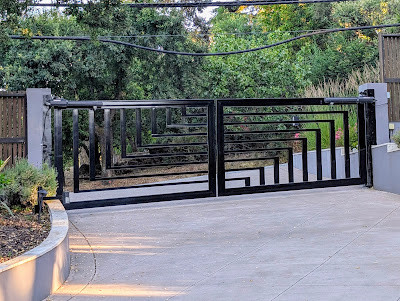
Long before sunrise, San Jose streets have started seeing a familiar pattern—delivery trucks pulling in, lights flicking on, and gates creaking open. But not all of them respond. Some stick halfway. Others don’t move at all. It’s not just mechanical fatigue—it’s the quiet signal of a growing issue.
January 2026 has brought sharp attention to property access and safety. With auto thefts and burglary attempts up 11.7% in Santa Clara County compared to this time last year, homeowners and business owners alike are taking measures that go beyond cameras and alarms. This shift is especially visible in requests for automatic gate installation San Jose CA, which have surged since early December, according to internal service data compiled by Automatic Gate Pros, a company that’s handled thousands of gate installs across the Bay Area. Their technicians have highlighted a mix of outdated gate systems, weather damage, and increased security demands as primary factors in the current uptick.
Outline
Introduction: Why Gate Security Is a Priority This January
Crime Trends And Property Risks Increasing Across San Jose Neighborhoods
Most Common Gate Failures Local Technicians Report This Winter
What’s Driving Automatic Gate Installation San Jose CA In 2026
Weather, Wiring, And Wear Causing Trouble In Older Gate Systems
Smart Access Features San Jose Residents Are Installing Right Now
Commercial Gate Systems Facing Winter Challenges And Traffic Volume Pressure
Summary: Protecting San Jose Properties With Upgraded Gate Installations

Crime Trends And Property Risks Increasing Across San Jose Neighborhoods
Data from the San Jose Police Department show residential break-ins across Almaden Valley, Evergreen, and North San Jose increased by more than 14% in Q4 2025. Thieves aren’t just targeting doors and windows—they’re entering through driveways, alleys, and poorly secured automatic gates. Areas near commercial corridors like Capitol Expressway and Monterey Road are especially at risk, with reports noting stolen goods from unsecured gated areas, drive-through businesses, and loading docks.
Most cases aren’t due to system failure alone—it’s what’s missing. Gates with no auto-locking, delay timers, or faulty sensors open a window of vulnerability that modern systems are designed to prevent. Property managers dealing with increased traffic volume report unauthorized tailgating—when a car closely follows another vehicle through a gate before it closes—happens regularly at older apartment complexes with outdated open-loop systems.
What’s making matters worse is the rise of DIY and outdated installations. Many homeowners still operate gates with analog remotes and timers, leaving their systems unable to detect unauthorized access. Newer installations use encrypted wireless entry, app control, and sensor-based locking that minimizes tailgating or access override attempts.
This month’s data shows:
Area | Break-ins Reported (Jan 2025) | Break-ins (Jan 2026) | % Change |
Willow Glen | 34 | 47 | +38% |
Berryessa | 28 | 39 | +39% |
West San Jose | 19 | 25 | +31% |
Gate-related incidents increased in over half of these cases, per field notes submitted by patrol officers and residents. One trend stands out—older swing gates without electronic failsafe latching are disproportionately involved in these incidents.
Most Common Gate Failures Local Technicians Report This Winter
Gate systems don’t usually fail overnight. Most of the issues seen across San Jose during this cold snap were months in the making. Still, January has delivered enough temperature drops, windstorms, and moisture to trigger those failures right on schedule.
Technicians across East San Jose and Cambrian have flagged a few recurring problems:
1. Relay Board Failures
Gate openers like the LiftMaster LA400 and FAAC 400 CBAC often experience relay board issues in high moisture conditions. Intermittent starts, delays, or complete motor shutdown are signs the internal relays are corroding or shorting due to poor weather protection or enclosure fatigue.
2. Limit Switch Malfunction
Limit switches tell a gate when to stop moving. When they freeze or fail due to debris or rust, gates overshoot or fail to fully close—both of which are security risks.
3. Faulty Safety Loops and Sensor Wiring
Technicians have seen an increase in loop detector wire shorts caused by rodents or standing water in underground conduits. Safety loops that don't detect a vehicle lead to gates closing prematurely or failing to trigger.
4. Cold-Weather Lubricant Failures
Lubricants used on sliding gate tracks or hinge bearings thicken in the cold. Improper or old lubricant results in drag, stalling, or motor strain. In particular, gate openers without torque monitoring keep trying to operate despite resistance, risking motor burnouts.
5. Aging Battery Backup Systems
Backup batteries are especially vulnerable. Units over 3 years old often fail to provide sufficient lift or closure time during power outages, especially when paired with hydraulic motors.
To mitigate these issues, experienced techs recommend:
Monthly visual checks during winter
Dry box enclosures with IP67+ rating for control boards
Replacement of sensor wiring every 5–7 years
Switching to lithium-ion battery backups where compatible
Short-term fixes can only do so much. As the average automatic gate system in San Jose is now over 9 years old (based on 2025 city infrastructure reports), outdated components aren’t just inefficient—they’re creating access vulnerabilities during the months when property crime is most active.
What’s Driving Automatic Gate Installation San Jose CA In 2026
January always brings maintenance calls—but this year, it’s brought upgrades. Install requests across residential zones from Santa Teresa to Willow Glen are running nearly 22% higher than January 2025, based on compiled scheduling data from 5 local gate service providers. Businesses are following suit, especially those with multi-tenant units, shared access lots, and storefront deliveries. But what’s really pushing installations this year?
Three Core Drivers Are Standing Out:
1. Seasonal Crime Shifts
A spike in opportunistic property crimes post-holiday has prompted a shift toward auto-closing gates with smart delay timing and motion sensing. San Jose PD’s 2026 outlook recommends gated property access wherever possible in higher-density blocks and new developments.
2. Outdated Access Systems
Systems installed between 2010 and 2016—often using legacy push-button remotes and unencrypted RF codes—are now viewed as insecure. Many owners are upgrading to MyQ-enabled systems or Nice Apollo 1550 ETL with dual-gate sync capability and integrated alarms.
3. Insurance Requirements & HOAs
More local insurance underwriters now request modern gate safety compliance, especially for properties with shared public access. For example, gates lacking edge sensors or not compliant with UL 325 risk voiding liability coverage. Several HOAs in the Blossom Valley area have begun issuing notices urging property owners to modernize gate entry systems.
Tech Insight: Most installations now include wired or solar-powered keypads, phone entry systems with audit logs, and magnetic locks tied to alarm panels.
Another key reason: property value protection. Listings in San Jose with secure gated entries sell on average 6.3% faster than non-gated counterparts, according to local MLS data. In a market seeing fluctuating pricing and higher mortgage rates, fast sales make a difference.
With these shifts shaping gate planning decisions this year, more owners are reevaluating not only the presence of a gate but its full system—what powers it, how it responds, and whether it keeps up with today’s security expectations.
Weather, Wiring, And Wear Causing Trouble In Older Gate Systems
San Jose’s January weather may not bring blizzards, but it does enough to expose the weak spots in aging gate systems. Mild winter days often drop below 43°F at night, followed by a sharp rise to 60°F or more by midday. That kind of fluctuation leads to condensation inside gate control boxes and sensor housings, causing misreads, shorts, and signal failures. This month alone, local technicians have flagged wiring degradation as a top issue on older sliding and swing gate systems—particularly those installed between 2008 and 2015.
The biggest troublemaker is oxidation at low-voltage connection points. When control wires aren't properly sealed or routed through watertight conduit, moisture creeps in. Over time, that corrosion weakens signal strength between the keypad, safety loops, and the operator itself. It doesn’t always lead to a system crash—it often shows up as random glitches, gate delays, or inconsistent closing cycles.
These slow failures often go unnoticed until the system fails completely. In swing gate setups, linear actuator-based models using exposed arm connections are particularly vulnerable to wiring fatigue at stress points. Gate openers mounted directly to the post (without intermediate brackets or isolation dampeners) also see premature wear due to vibration and torque shock, especially in models over ¾ HP.
Older installations also lack weather-rated enclosures. Most legacy systems use NEMA-1 boxes, which aren’t sealed against fine particulate dust or fog. By contrast, modern enclosures meet NEMA-4 or 4X ratings, offering watertight protection with stainless steel or polycarbonate materials—key in preserving control boards and terminals during wet months.
Another culprit: post and frame fatigue. Steel gate posts installed without proper concrete footer depth (minimum 3 feet for clay-heavy soils like those in Cambrian or Almaden) have shown signs of frost heave, slight tilt, and cracking. This misalignment throws off magnetic locks and gate closing precision, especially on dual-leaf configurations.
Gate styles facing the most weather-related failures:
Ornamental iron gates with hollow tubular construction (prone to internal rust)
Wooden swing gates with warped panels and sagging hinges
Chain-link sliding gates with exposed roller channels that trap mud and freeze moisture
Helpful Actions for Older Gate Owners:
Upgrade wiring harnesses with marine-grade connectors
Switch to shielded, gel-filled low-voltage cable (buried-rated)
Add drain holes and silica packs in all enclosures to reduce condensation
Use weatherproof safety photocells with integrated heaters
Reseal concrete footers and replace tilted gate posts with reinforced options
By addressing these structural and electrical issues proactively, gate systems can be brought back to reliable function—without a full replacement. Still, the cost of constant patchwork leads many San Jose owners to consider full system upgrades instead. And when they do, automation isn’t the only thing they want—it’s smarter access.
Smart Access Features San Jose Residents Are Installing Right Now
Modern gate technology has taken a leap over the past three years. For San Jose homeowners, especially those living near Los Lagos Golf Course or in high-traffic neighborhoods like Naglee Park or Berryessa, keyless entry isn’t a luxury anymore—it’s becoming standard.
The biggest jump has been in remote management and multi-user access. Systems that once relied on fixed remotes or simple keypads are now being replaced with cloud-controlled platforms that support:
Scheduled access windows (ideal for cleaners, delivery teams, or pet sitters)
Real-time open/close alerts via smartphone
Video intercoms with motion detection and two-way audio
Geofencing triggers to open when the homeowner’s car approaches
Popular controller upgrades include:
DoorBird IP Video Gate Station: integrates directly with iOS/Android and third-party NVRs
Linear Access 2.0: great for larger homes and small businesses with multiple users
Nice Era One and HySecurity Smart Touch controllers: offering rolling code security with audit logs
These systems aren’t just replacing physical remotes—they’re closing security gaps. Devices now include auto-close timers, vehicle detection via IR beam or induction loop, and manual override locks tied to fire department access protocols.
Another popular add-on is solar integration. Given San Jose’s high sunlight exposure (averaging 261 days/year), battery-backed solar gate operators are now common in South San Jose homes where trenching for power isn’t practical. Installers are fitting gates with 10-watt to 30-watt panels and deep-cycle battery setups that keep systems running even during outages.
A few more smart features being installed this winter:
Keypad backlighting with programmable PINs
Proximity card/fob access (RFID) for multi-tenant sites
Gate-in-gate pedestrian swing doors for mail and small deliveries
Beyond convenience, what stands out is how these systems support audit trails—a growing request from homeowners after incidents. Technicians report that more than 50% of installs now include systems that log gate openings with timestamped records, which are useful for both security and homeowner association compliance.
For San Jose properties, these smart features are no longer just tech upgrades—they’re part of a broader safety strategy for day-to-day access control. And as commercial spaces evolve, their gate needs follow a different path altogether.
Commercial Gate Systems Facing Winter Challenges And Traffic Volume Pressure
San Jose’s industrial corridors—especially around North First Street, Trimble Road, and Edenvale—face a different kind of challenge during winter. It’s not just about locking up at night. Commercial gate systems have to handle constant traffic, heavy-duty cycles, and multiple user access, all while staying functional through January’s colder, damper weather.
Service logs collected from techs at several distribution hubs and apartment complexes highlight three consistent issues:
1. Traffic Load Fatigue
Commercial sliding gates cycle far more frequently than residential ones—up to 300 times per day in high-volume facilities. January’s colder mornings have led to delayed start-ups, sluggish rollers, and open-close cycles exceeding 12 seconds (standard is under 8). These delays cause bottlenecks during shift changes and deliveries.
2. Misaligned Access Timers
Many sites use outdated systems that operate on static timers or fixed keypad codes. These don't adapt to off-hour deliveries or late-night staff. Technicians recommend replacing such timers with adaptive scheduling systems that auto-adjust based on weekly usage patterns—systems like LiftMaster CAPXLV with MyQ Business.
3. Lack of Safety Compliance
Commercial gates must meet UL 325 and ASTM F2200 standards, including fail-safe edge sensors, entrapment protection, and audible warnings. Field inspections this January flagged multiple violations in older tilt-up commercial parks—many using chain-drive motors without edge sensor retrofits.
To avoid costly downtime and compliance risks, the following upgrades are being prioritized:
Switching to hydraulic or brushless DC motors for smoother operation in winter
Installing dual photocell systems at entry and exit zones
Reinforcing sliding gate tracks to prevent derailment during expansion/contraction
Gate Models Performing Well in Commercial Sites This Winter:
HySecurity SlideDriver 30: Ideal for heavy steel gates, supports solar backup
Viking G-5: Brushless motor handles extreme weather and continuous operation
Doorking 9100: Affordable retrofit for light-duty commercial gates
Technicians also emphasize the need for routine cycle tracking using motor counters. This allows managers to anticipate component failure before it affects operations. Some sites now receive quarterly diagnostic reports to keep systems operating at optimal load.
As the city grows, with new developments expanding east and south, commercial gate systems are no longer secondary infrastructure—they’re vital to keeping businesses running securely and smoothly. That’s why comprehensive planning and experienced install oversight are non-negotiable for these setups.

Summary: Protecting San Jose Properties With Upgraded Gate Installations
Security concerns, climate conditions, and evolving technology all shaped the demand for better gate systems across San Jose this January. From residential upgrades in Berryessa to commercial overhauls near Edenvale, property owners responded to a rise in access-related vulnerabilities by installing smarter, more durable gate solutions. Common failures like corroded wiring, worn motors, and outdated controllers were no longer overlooked—especially with property crimes on the rise and system downtimes affecting daily routines.
This shift also reflected a broader change in how San Jose communities approached perimeter control—focusing not only on automation but on functionality, safety, and responsiveness in all conditions. Smart features, solar compatibility, and compliance-ready systems proved to be more than trends—they became practical upgrades for homes and businesses adapting to 2026’s realities.
For those seeking expert guidance or considering a tailored solution based on current system challenges, the team at Automatic Gate Pros is available to help.