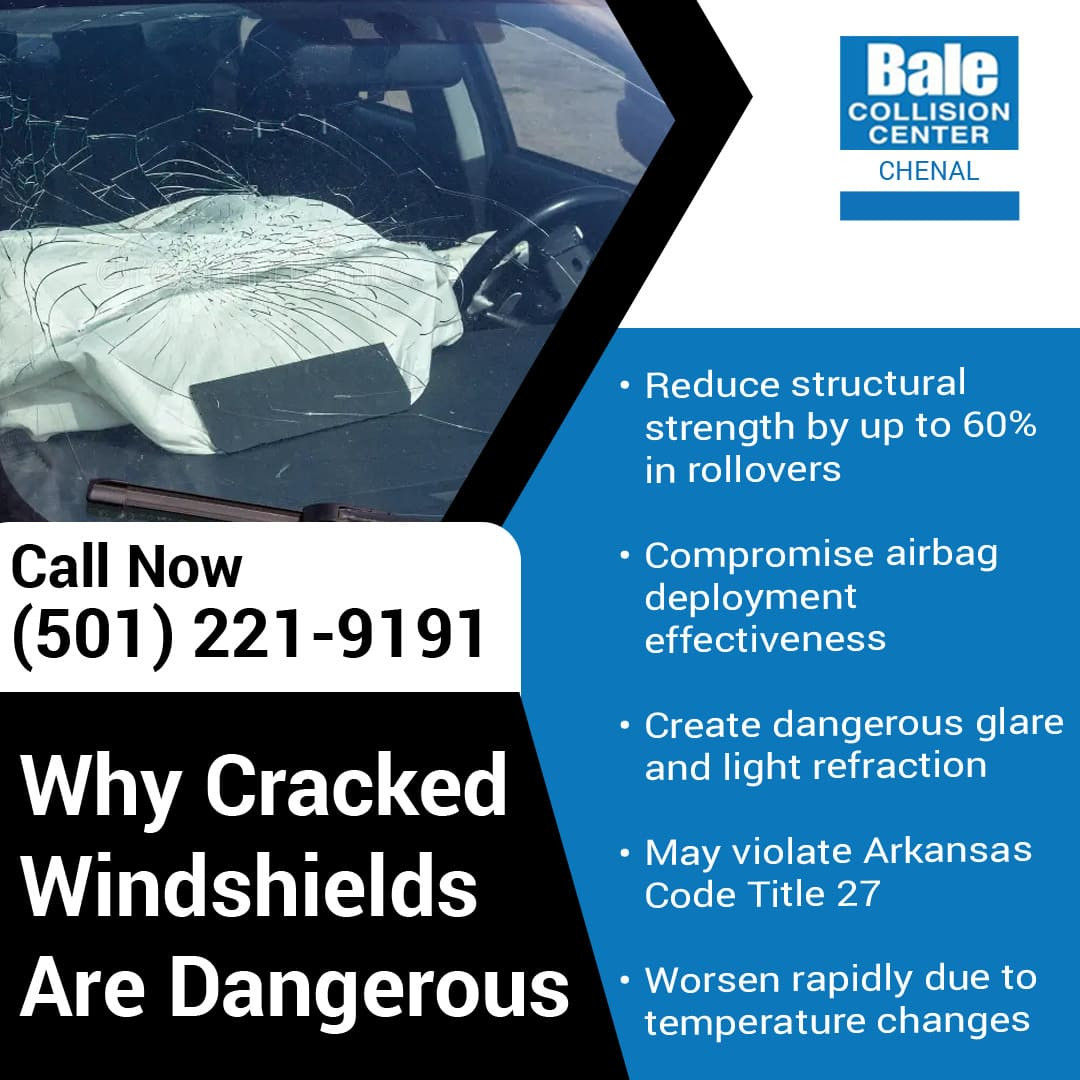
Little Rock, AR - A cracked windshield may look harmless at first glance, but it can lead to real legal and safety problems for Arkansas motorists. Bale Collision Center (Chenal), known for delivering trusted auto body services in Chenal Parkway, Little Rock, is calling attention to the risks associated with driving a vehicle that has windshield damage.

Arkansas Law Addresses Driver Visibility Obstruction
Under Arkansas Code Title 27, motorists are prohibited from driving with any material or damage on the windshield that obstructs the operator’s view, particularly above 4.5 inches from the base of the windshield. The law does not specify exact crack dimensions but instead focuses on whether visibility is impaired. This allows law enforcement officers discretion in issuing citations when windshield damage affects the driver’s line of sight.
Police commonly issue equipment violation citations for obstructed windshields, which may start as fix-it tickets. However, failure to complete repairs within the prescribed timeframe can escalate the offense and potentially impact vehicle registration or driving privileges.
Federal Regulations Set Additional Standards
Federal Motor Vehicle Safety Standards (FMVSS) apply nationwide and set clear limits on acceptable windshield damage. Cracks in the critical vision area (defined as the area directly above the steering wheel and extending several inches in each direction) are not permitted under federal guidelines.
Damage such as intersecting cracks or chips within three inches of each other violates FMVSS regulations, regardless of size. In addition, all windshields must transmit at least 70% of light to maintain safe visibility. Arkansas enforces both state and federal requirements, meaning drivers must meet the more stringent of the two standards.
The Hidden Dangers of Windshield Damage for Vehicle Safety and Driver Focus
Structural Integrity and Airbag Function Depend on the Windshield
Cracked or chipped windshields reduce vehicle safety in the event of a collision. The windshield contributes up to 45% of a vehicle’s structural strength during a front-end impact and as much as 60% during a rollover. Damage weakens this structural component, potentially allowing the roof to collapse in serious accidents.
Airbag systems also rely on the windshield during deployment. In many vehicles, passenger airbags use the windshield as a backstop. A compromised windshield may fail during airbag activation, leading to improper inflation or passenger injury.
Visibility Issues Worsen Under Varying Conditions
Cracks create distracting light refractions during both day and night. Sunlight often reflects off crack edges, creating glare that masks pedestrians or traffic signals. At night, headlight beams from oncoming traffic can scatter across cracked surfaces, producing blinding light flares.
Beyond visual distortion, the human eye instinctively focuses on irregular patterns. Drivers may become unconsciously distracted by windshield damage, pulling their attention away from road conditions or traffic movements.
Glass Damage Tends to Worsen Over Time
Small chips often expand into longer cracks due to routine driving vibrations, air pressure shifts, and fluctuating Arkansas temperatures. Sudden cold or heat can cause minor defects to spread across the windshield surface. What starts as a minor blemish may grow into a repair-resistant safety hazard if left unaddressed.
Auto Body Shops Offer Repair and Replacement Guidelines
Certified auto body professionals can determine whether a windshield requires repair or replacement. Generally, cracks under three inches or chips smaller than a quarter may be repaired, but location plays a key role. Any damage in the driver’s field of view or near the edge of the glass often requires full replacement.
At Bale Collision Center, technicians evaluate windshield integrity, damage location, and visibility impact. When replacement is needed, OEM-grade glass is installed to match factory specifications. Installations follow Auto Glass Safety Council protocols for bonding and curing.
Advanced Driver Assistance Systems Require Calibration
Modern vehicles include Advanced Driver Assistance Systems (ADAS) such as lane-keeping alerts, forward collision warning, and adaptive cruise control. Many of these systems use cameras and sensors mounted near the windshield. After glass replacement, these systems must be recalibrated to restore proper functionality.
Bale Collision Center performs post-replacement ADAS calibrations as part of its auto body repair offerings. This step restores camera alignment and sensor accuracy so drivers can rely on automated safety systems once again.

Bale Collision Center Offers Full Auto Body Services in Chenal, Little Rock
In addition to glass repair, Bale Collision Center provides complete car body repair services at its facility on Chenal Parkway in Little Rock, AR. Services include frame straightening, paintless dent removal, structural repairs, and OEM-certified restoration procedures. The center holds I-CAR Gold Class certification, reflecting advanced training and ongoing technician education.
Take Action to Stay Safe and Compliant
Driving with a damaged windshield puts both safety and legal compliance at risk. Arkansas laws, federal safety standards, and common driving conditions all point to the need for prompt repairs or replacement.
Bale Collision Center invites drivers in the Little Rock area to schedule a windshield assessment today. Call (501) 221-9191 to book an appointment or discuss the service options at the auto body shop. For questions, email [email protected].