
From a "Hot City" to an "Ice City": Harbin Transforms Its "Cold Resources" into a "Golden Business Card"
In the recently concluded ice and snow tourism season, a surge of tourists from Southeast Asia—including Thailand and Malaysia—flocked to Harbin, Heilongjiang Province. This winter, bookings for Harbin’s ice and snow tourism products in the Southeast Asian market rose by 57% year-on-year. Meanwhile, Harbin Ice and Snow World continues its annual upgrade and transformation: CNN conducted a live New Year’s Eve broadcast from the site, while the CMG 2026 Spring Festival Gala designated it as a sub-venue—seamlessly integrating the ethereal beauty of ice and snow with profound humanistic resonance to showcase Harbin’s distinctive urban character. According to the “Harbin Daily,” during the 2026 Spring Festival holiday period, Harbin welcomed a total of 13.663 million visitors and generated tourism revenue amounting to RMB 21.18 billion—representing year-on-year growth of 12.4% in visitor volume and 10.6% in tourism expenditure, respectively
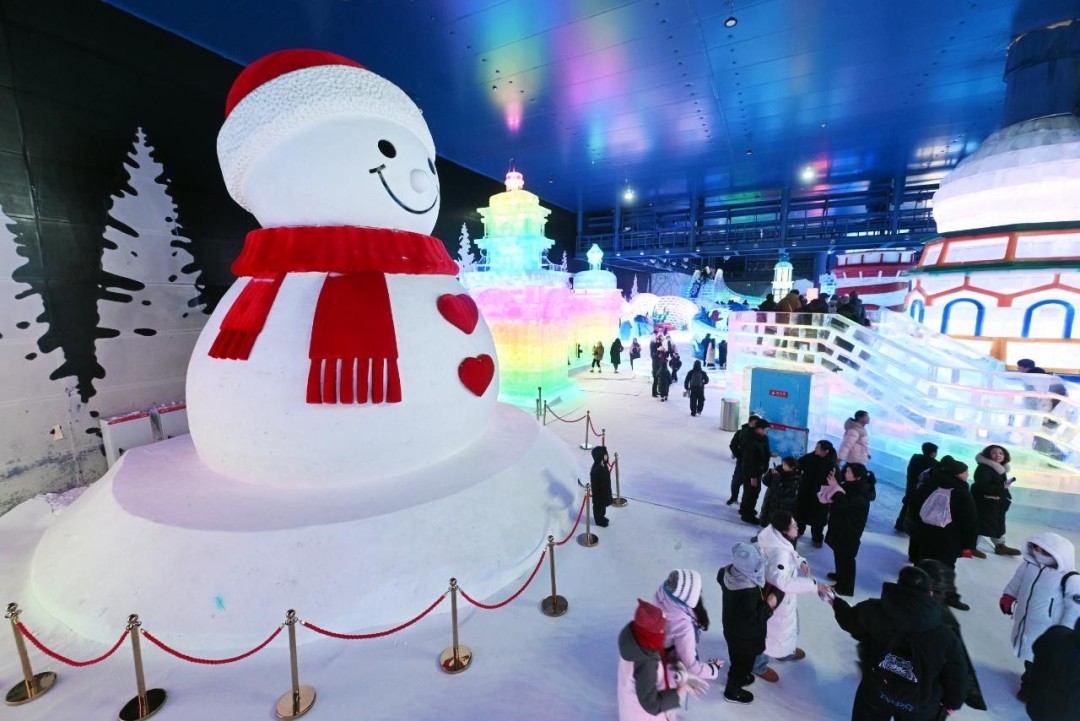
During the Spring Festival, Harbin welcomed 106,000 inbound tourists—ranking among the top ten most popular destinations for inbound Spring Festival tourism in China. The Southeast Asian market delivered strong performance: traditional source markets—including Thailand and Malaysia—continued their robust promotional efforts, while emerging markets such as the Philippines and Myanmar demonstrated notable growth. According to official Spring Festival statistics, out-of-province visitors accounted for 36.7% of the total, reaching 5.014 million. Travelers born after 1990 (“post-90s”), after 2000 (“post-00s”), and even after 2010 (“post-10s”) have emerged as the dominant demographic. This cohort favors independent travel, shows keen interest in ice-and-snow-themed cultural creativity and personalized travel photography, and places high value on immersive, authentic engagement with local life.
Policy incentives and infrastructure enhancements are also driving the growth of Harbin’s ice-and-snow tourism industry. Since the implementation of the 240-hour transit visa-free policy on December 17, 2024, the number of foreign tourists entering Harbin Taiping International Airport without a visa has surged by 285.3%. During the Spring Festival holiday period, passenger throughput at Harbin Taiping International Airport reached 855,900, with a daily peak exceeding 100,000; meanwhile, the railway network transported 2.578 million passengers. The China–Vietnam Flight Express has launched direct flights to Hanoi and Ho Chi Minh City in Vietnam. Additionally, the newly inaugurated Harbin–Bangkok air route—launched on December 23, 2025—will operate 17 flights by the end of January 2026, helping establish a global “ice-and-snow air corridor.”
Harbin is advancing its ice-snow economy from “seasonal prosperity” to a “comprehensive, full-value-chain transformation.” The inaugural Harbin International Ice and Snow Economy Expo attracted industry leaders—including Bombardier Inc. and TechnoAlpin—as well as approximately 300 enterprises from countries such as Finland and Switzerland. This milestone signifies Harbin’s evolution from an “ice and snow consumer” to a “strategic resource integrator.” The “Global Mayors Dialogue · Harbin” convened municipal representatives from multiple cities worldwide and launched collaborative initiatives to establish a robust framework for global cooperation among ice and snow cities.
This winter season, Harbin has demonstrated—through its systematic strategy, meticulous execution, and open-minded approach—that cold is not a constraint on development, but rather an asset.
Information contained on this page is provided by an independent third-party content provider. XPRMedia and this Site make no warranties or representations in connection therewith. If you are affiliated with this page and would like it removed please contact [email protected]
